Grain
Cut along the fabric threads for structure and stability; it keeps with dress construction.
 Dressmaker
Pattern cutting
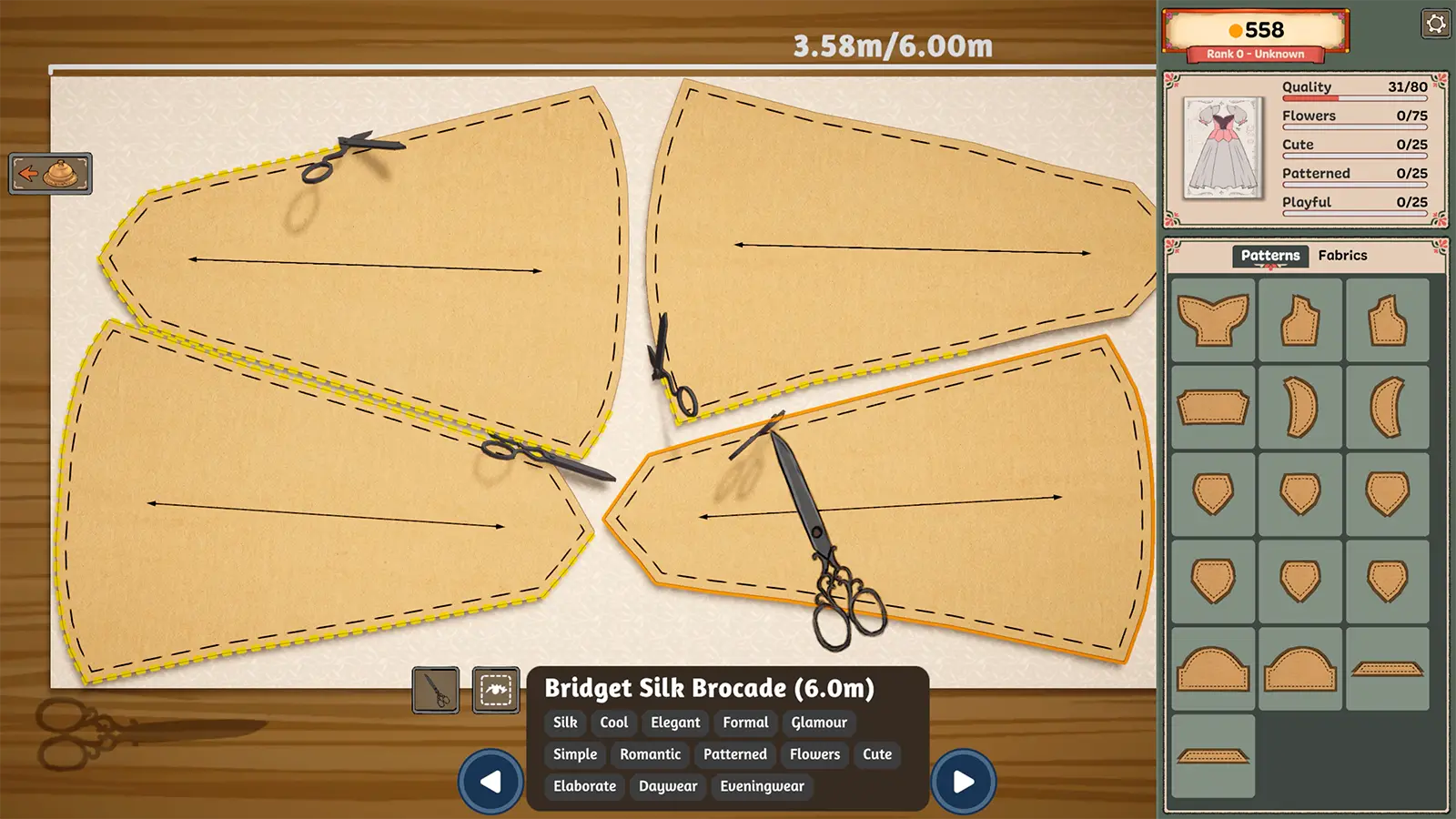
In Dressmaker, whether pieces sit aligned to the grain or cut on bias is what shows on the finished dress. You arrange pattern pieces on the cloth, cut them, and pin the result to a mannequin that has already been set to the client standing in your shop. Each panel can use a different fabric, so a bodice on silk can sit next to a skirt on wool without the game forcing a single roll across the garment.
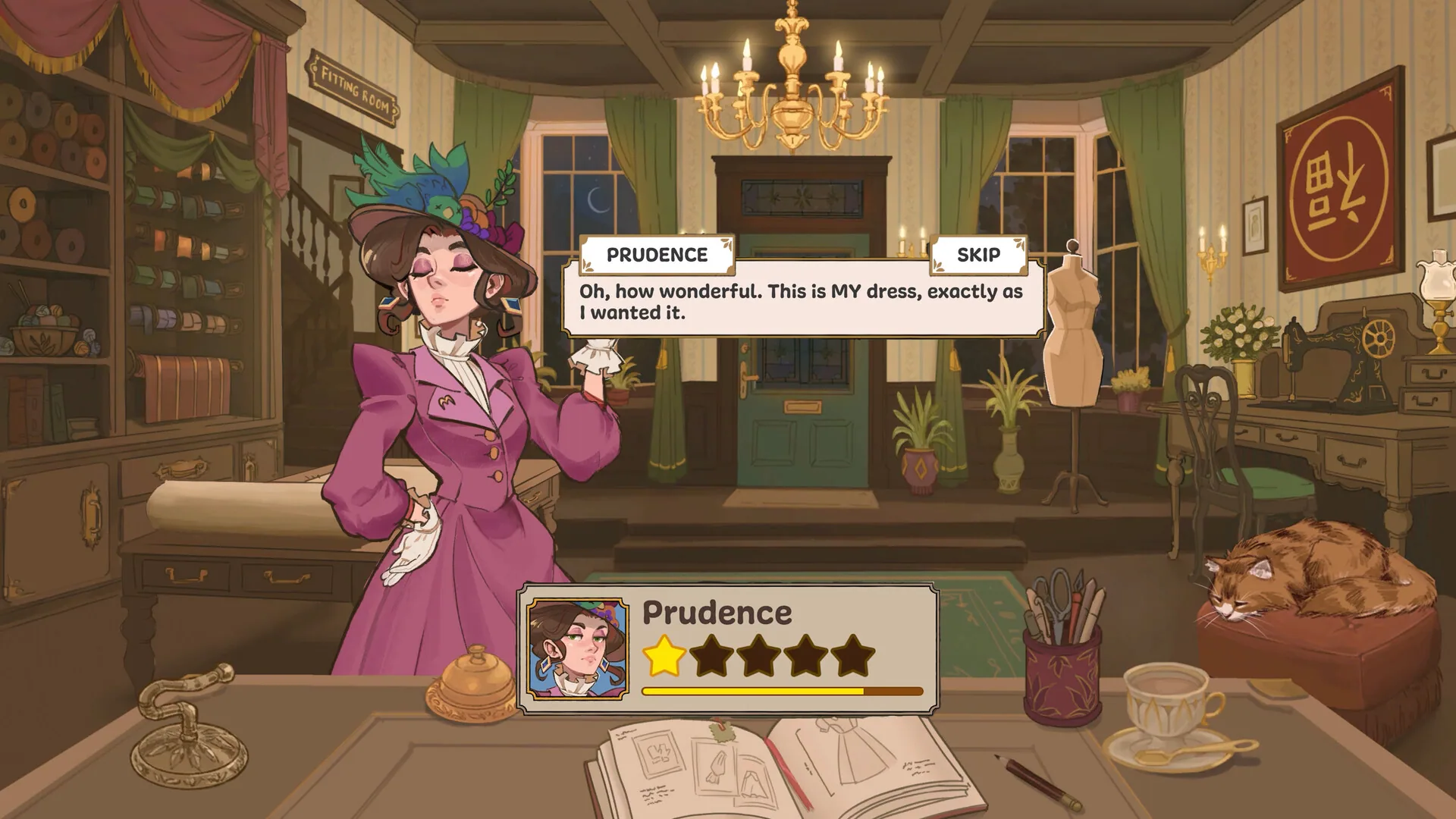
April Tea from Cozy Lives is the first-party note that makes the mannequin more than a preview dummy: each character is measured, the form is adjusted to those measurements, and pattern pieces are drafted to that person. That is why a dress that looks balanced on one client can hang short or tight on the next if you reuse a layout without checking the form. Build 403 later made the cutting-room cursor visible again after it could vanish, which matters because grain lines are easy to misread when the pointer is gone.
Cut along the fabric threads for structure and stability; it keeps with dress construction.
Cut at a 45-degree angle to the fabric grain to allow more stretch and drape, creating a fluid silhouette.
The Steam extras text treats arrangement as the thing you see later: aligned to the grain follows the warp and weft, so panels keep their shape when the dress is worn in town or hung in the window. That is the cut you want on a structured bodice, a waist stay, or any piece that should not twist as the client walks. Because every panel is its own fabric assignment, you can grain-cut the parts that need to hold and still bias-cut a drape elsewhere on the same commission.
Waste is a real constraint on the table. Pieces that ignore the grain can still be valid if you want stretch, but they eat the roll at a diagonal and leave odd offcuts you may need later for facings or appliqué. The cutting still from the press kit shows pattern paper, a rotary cutter, and a notebook of sketches beside the cloth — the same tools the loop asks you to use before you ever sit at the sewing machine.
If a layout looks cheap on the form, the fix is usually rotation, not a new sketch. Slide the piece so its long edge follows the threads, recut, and pin again. The game is explicit that this arrangement step, not a later shader, is what appears on the garment.
Bias is a 45-degree turn off the grainline. Steam copy uses that language because the cloth then stretches along the body instead of locking to the warp. Use it when a client wants a fluid skirt, a cowl, or a neckline that should fall rather than sit. The same roll that was stable on grain will now move, so a silk bias panel behaves differently from a velvet bias panel even at the same angle.
Custom shaders from April Tea already give silks, velvets, and sequins a distinct shininess; bias adds motion on top of that shine. A velvet cut on bias will still read as velvet, but the pile and the stretch stack, which is why a heavy trim on a bias hem can pull the silhouette off the mannequin's measurement. If a commission asks for structure and you bias the whole dress, the form will show the collapse before you sew.
You do not get a hidden stat for 'correct' grain. The store line is visual: what you arranged is what appears. Clients still pay for a dress that matches the event, so a bias evening skirt can be the right call even if it uses more of the roll than a grain layout would have.
The mannequin is the checkpoint between cutting and sewing. Official notes say it is adjusted to the person who commissioned the dress, not to a generic size. Pin the freshly cut pieces, walk around the form, and look for hems that hit the wrong landmark or bodices that gap at the bust. That preview is cheaper than discovering the same error after the vintage machine has joined the seams.
Build 403's cutting-room cursor fix is part of this desk. If you cannot see where you are pointing, you cannot tell grain from bias on a busy print. The same patch also retagged lace trim, which matters once decorated edges start interacting with a bias hem. Keep the form in view while you recut rather than jumping straight to decorations.
Reuse is tempting after a successful commission. The ten named clients do not share one block. Alice, Rose, Dorothy, Fiona, Adora, Marie, Vivian, Edith, Priya, and Prudence are measured separately, so a layout that fitted one major-commission set will not automatically fit the next. Recheck the form every time you take a commission.
Once the form looks right, panels go to the sewing machine. Cutting mistakes become stitch lines: a bias edge fed through the vintage head will still stretch while you sew, and a grain edge will stay put. The infinite bobbin means you pick thread colour as design, not as a resource, so you can match or contrast without hunting spools.
Leave seam allowances in the layout. The press screenshot of the cutting table shows pieces drawn with internal lines; those lines are easier to follow than guessing after the cloth is off the roll. If you plan heavy appliqué or more than 50 metres of trim, keep a stable grain field under the weight instead of hanging that load on a bias flare.
When you are ready to stop arranging, the next player task is sewing, then decorating, then either a client delivery or a shop-window sale. Grain versus bias is the decision that still shows on that finished rack dress.