
Vintage sewing machine
sewing machine
After pattern pieces leave the table, Dressmaker asks you to feed fabric through a vintage sewing machine. Steam extras call out an infinite bobbin, which is the line that turns thread from a scarce resource into a colour decision. You are stitching panels that already carry grain or bias from the cut, so the machine is where those edges become seams rather than a second chance to redraw the sketchbook.
The workroom stills show the head sitting on a timber table beside the counter, not as a mini-game HUD. You sit with the same shop lighting, the same cat in the room, and the same client waiting on the other side of the bell. Build 403 did not replace the machine; it fixed surrounding shop tools so you can actually see the cutting cursor before you arrive here with a bad panel. Sit down only after the mannequin already agrees with the cut.
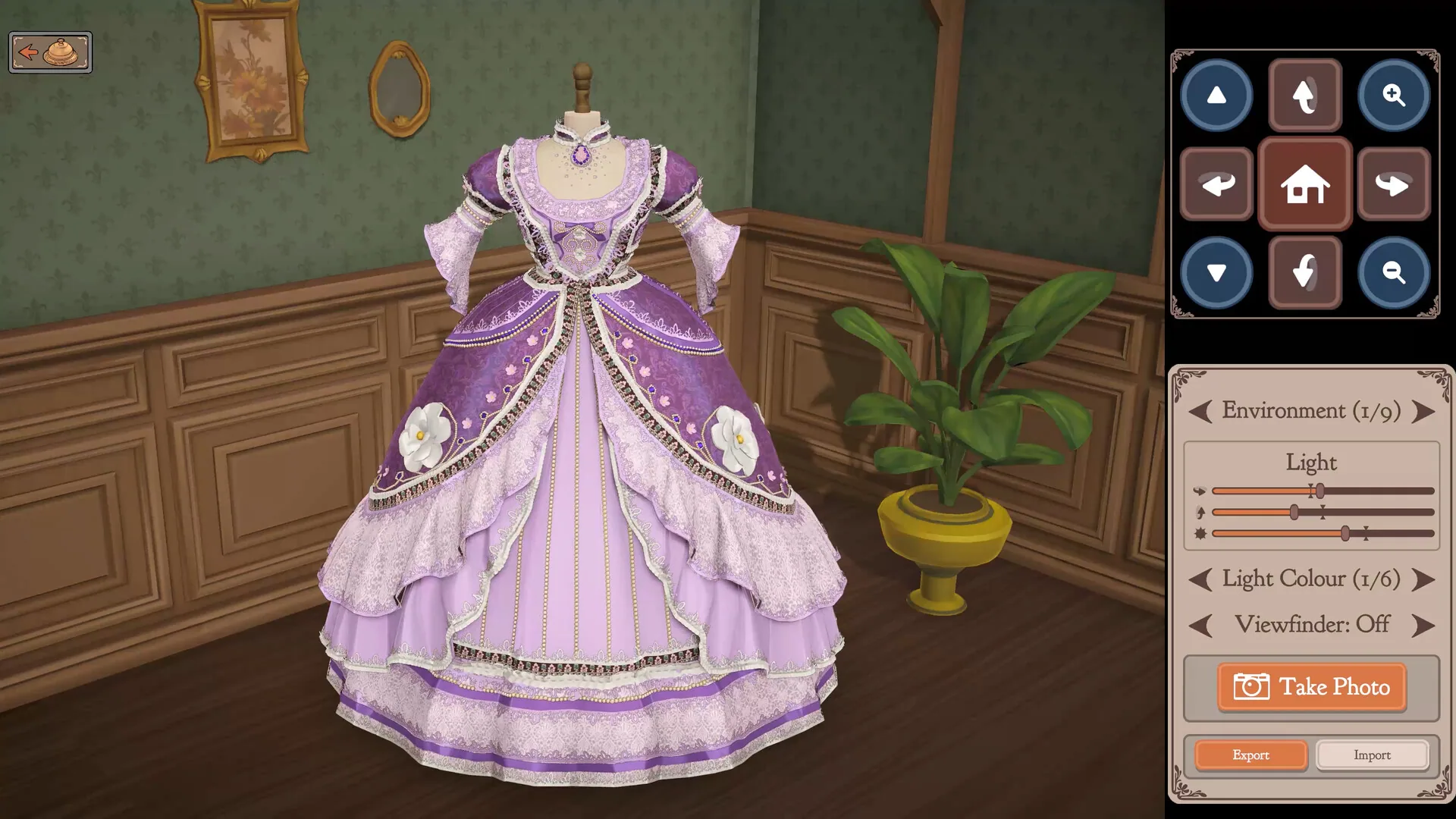
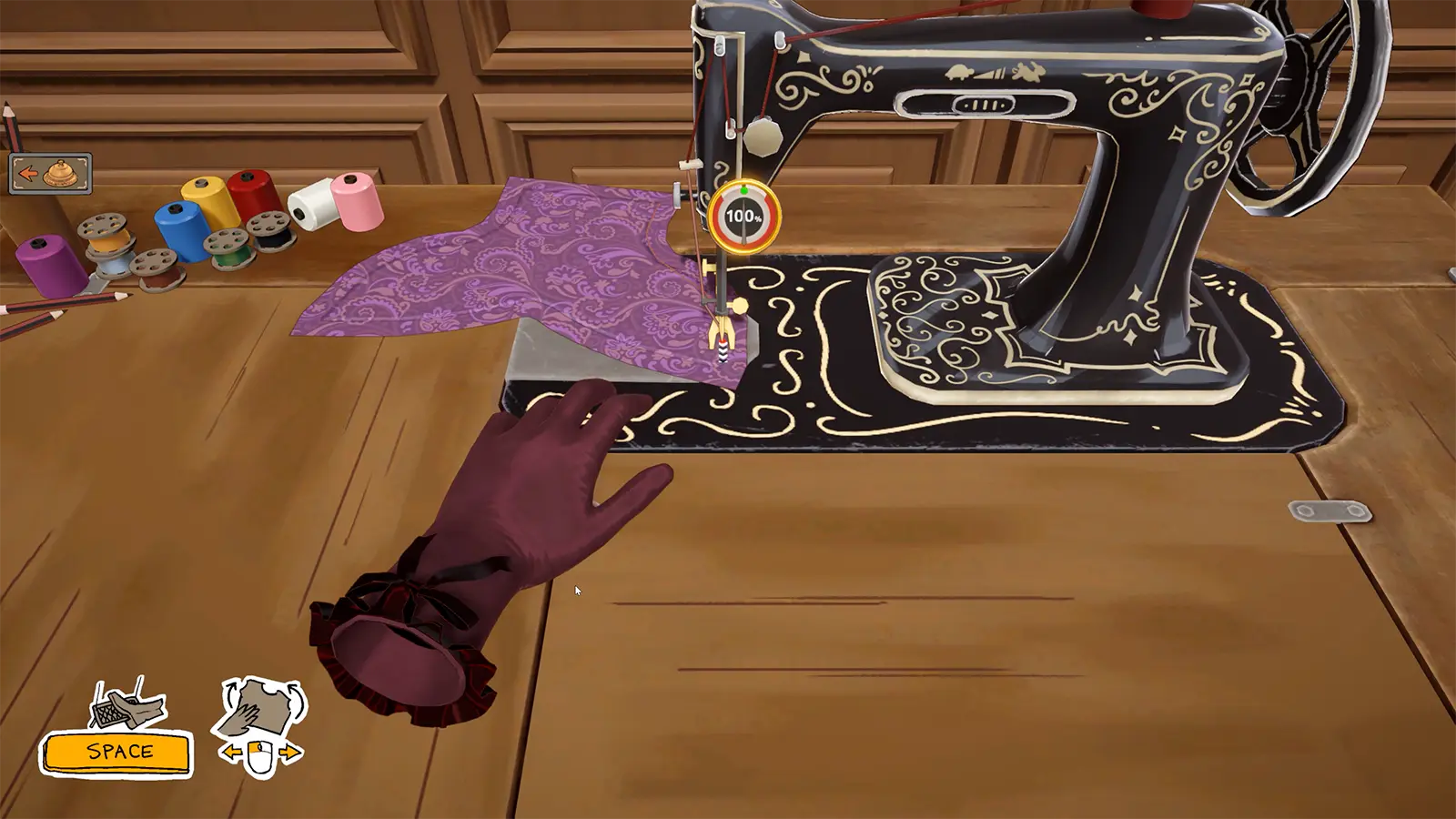
Infinite bobbin and thread colour
Official store art describes a sewing machine with infinite bobbin. That sentence is doing real work: you are not managing metre counts of thread, buying extra spools, or aborting a seam because the bobbin ran out. Colour is the choice. Match the silk, contrast the velvet, or run a visible topstitch that will still be there when the dress is in the shop window.
Because the bobbin does not empty, quality is about stitch placement on the panel you already cut. The visible achievement 99 Problems But A Stitch Aint One asks you to achieve 100% quality on a dress, which is a sewing-and-construction result rather than a thread-farming one. If a seam puckers, recut or resew; do not look for a thread vendor.
Thread still reads on trims. A lace edge from the decoration step sits on top of these seams, and Build 403 retagged lace trim so the shop records the right material. Pick a bobbin colour that will still make sense after buttons, bows, and appliqué land.
Feeding panels that already have a grain
The machine does not reset grain. A panel aligned to the grain stays stable under the foot; a panel you chose to cut on bias will still stretch as you guide it. That is why the cutting table belongs before this step even if the vintage head looks more dramatic in screenshots. Feed bias edges slower in your own head: the cloth will move, and a rushed seam becomes a twisted hem on the mannequin.
Each panel can be a different fabric family. Cotton next to silk means the foot is crossing two hands at the seam. Official copy never gives a hidden difficulty number for that join; it only promises that the arrangement you already made is what appears. If a mixed-fabric seam looks wrong on the form, the error started on the table or in the sketchbook, not in a missing bobbin.
Press kit shots of the machine show a real head, cloth in the bed, and the shop around it. Use that as the mental model: you are operating one vintage machine in a room, not a factory line. There is no second machine to unlock and no Linux-only prototype sewing mode on Steam.
Quality, commissions, and failed work
Steam Achievements surface 100% quality as a named goal. They also name Spend more than 5 000 gold on a successful dress, which is a reminder that a sewn commission can still be expensive even when it succeeds. Build 403 pays accepted failed commissions, so a dress that did not meet the client can still put coin in the till if the shop accepts the failure rather than voiding the ticket.
That patch is the closest first-party note on what happens when sewing goes badly. It does not publish a damage formula. It does tell you the studio wanted failed-but-accepted work to pay, which matters if you are experimenting with bias on a costly silk. Try the risky cut on a cheaper cotton commission before you put 5 000 gold of velvet under the foot.
Controller support is announced for later, not as a current sewing feature. Steam lists a Mouse Only Option and Playable without Timed Input, which fits a machine you guide rather than a rhythm minigame. Until proper controller support ships, plan to sew with the mouse.
What you sew toward
Decorations come after the seams exist. Buttons, bows, appliqué, and lace trims need a garment, not a pile of unjoined panels. If you plan the achievement for more than 50 metres of trim or over 300 accessories on one dress, finish the sewing pass first so the weight sits on actual seams.
Then you either ring the bell for the next customer — Build 403 requires that ring — or you hang the work in the window. Off-the-rack time is extra on top of the 35-hour story-commission estimate, so a well-sewn staple dress can keep earning while you draft the next major commission.
When a seam is the last thing standing between you and a client, go back to the form one more time. The vintage machine will not correct a hem that already missed the measurement. Pin, look, then stitch. A recut on the table is faster than picking a finished dress apart after the bobbin has already joined the wrong edges, and Build 403's visible cursor exists so you can still see those edges on the way back to the cloth.